
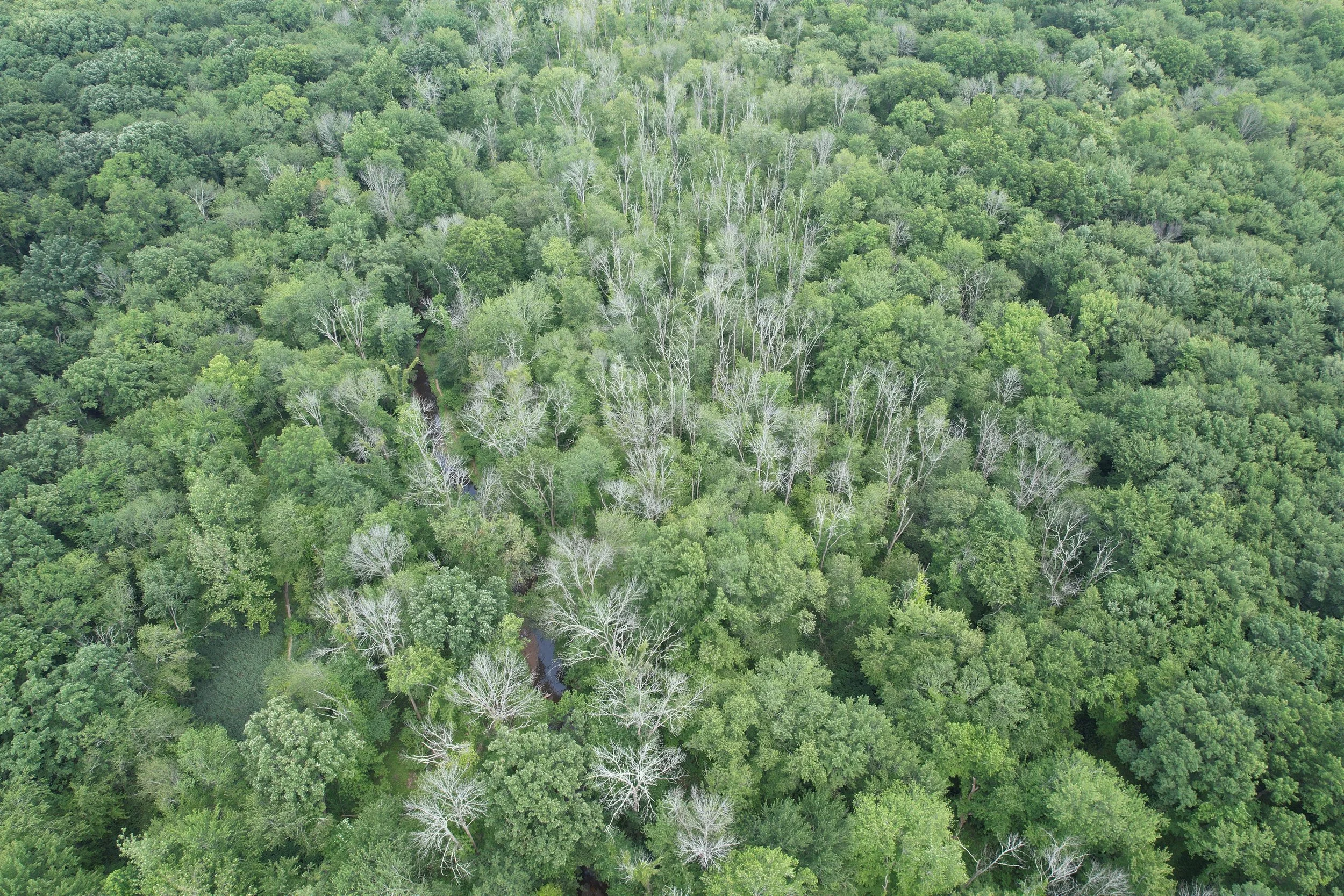
The Closter Nature Center is dedicated to preserving the 136-acre forest under our care, acting as responsible environmental stewards, and fostering a resilient ecosystem that will last for generations to come.
ENVIRONMENTAL STEWARDSHIP
At CNC, stewardship is a cornerstone of our organizational structure and guides the planning of all our initiatives.
A definition of environmental stewardship that underpins our mission is:
The responsible use and protection of the natural environment through conservation and sustainable practices to enhance ecosystem resilience and human well-being. (Ecosystem Stewardship: Sustainability Strategies for a Rapidly Changing Planet).
FOREST RESILIENCE
Fostering resilience is paramount in stewarding our forest. Resilience is an integral feature of responding to and interacting with the environment in a constantly changing world. A resilient system can effectively recover from disturbances, returning to its fundamental form and operation. Our reforestation and restoration initiatives are informed by the goal of increasing and sustaining forest resilience.
In collaboration with New Jersey Audubon in 2017, the Closter Nature Center facilitated the creation of its first Forest Stewardship Plan, designed to tackle critical forest threats and establish a roadmap for reforestation. The threats of greatest concern were:
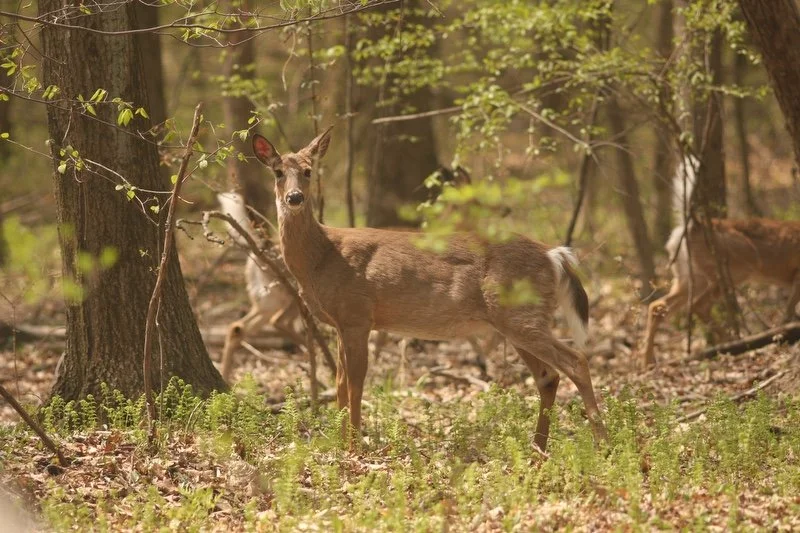
Deer browse, which had destroyed natural regeneration of forest understory shrubs and canopy trees.
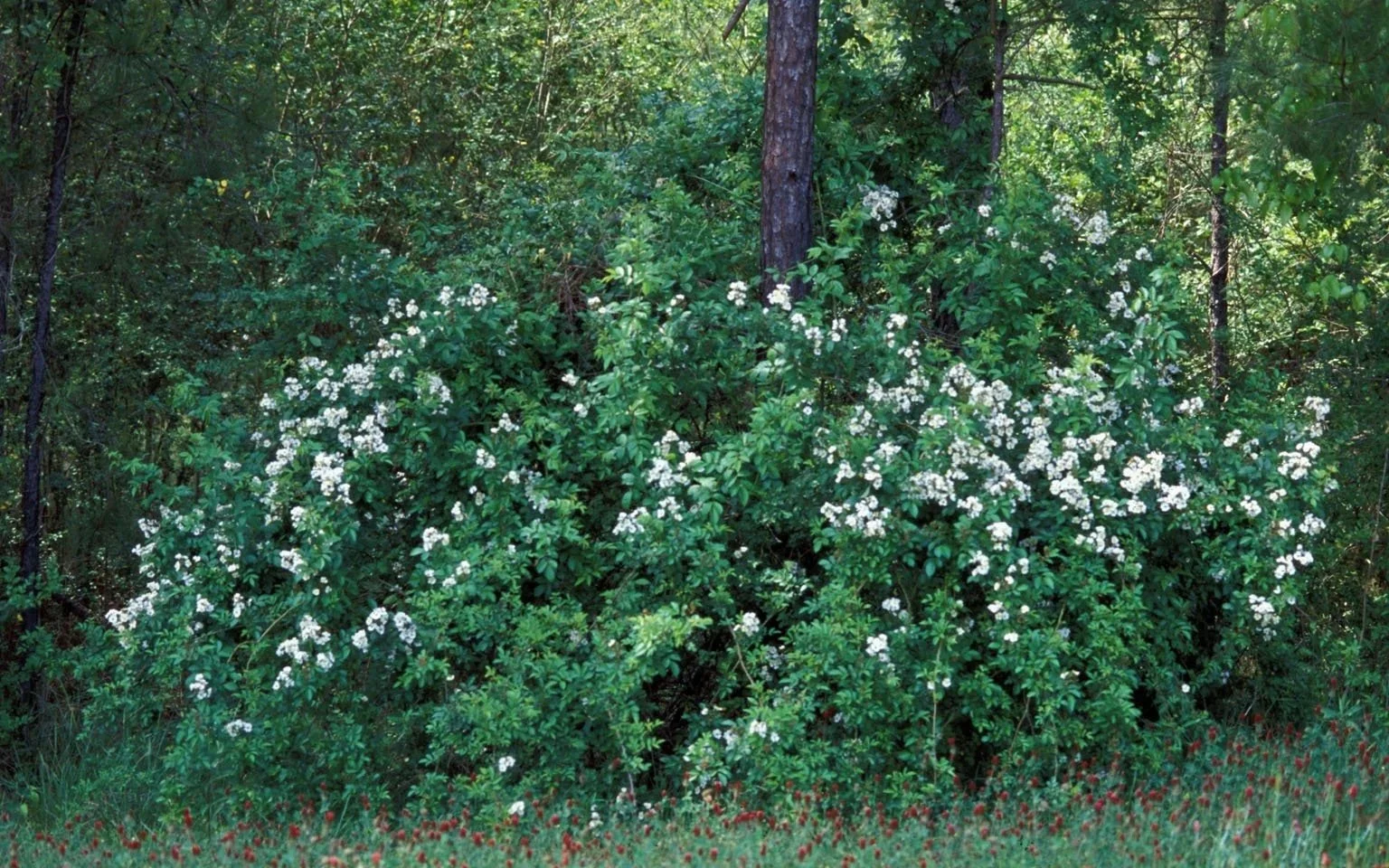
Invasive plant species which had begun to overwhelm critical native species.
Following a reassessment of the plan in 2023 by NJ Audubon, the Closter Nature Center has launched a series of projects aimed at mitigating these threats and restoring the health of the forest ecosystem.
In early 2026, the New Jersey Invasive Species Strike Team conducted an Invasive Species Survey and generated a comprehensive management plan. The data and expert recommendations from this plan will guide active mitigation efforts in the Orange Trail and White Trail reforestation efforts, as well as general management throughout the reserve.
FOREST STEWARDSHIP PLAN
ORANGE TRAIL REFORESTATION EXCLOSURES
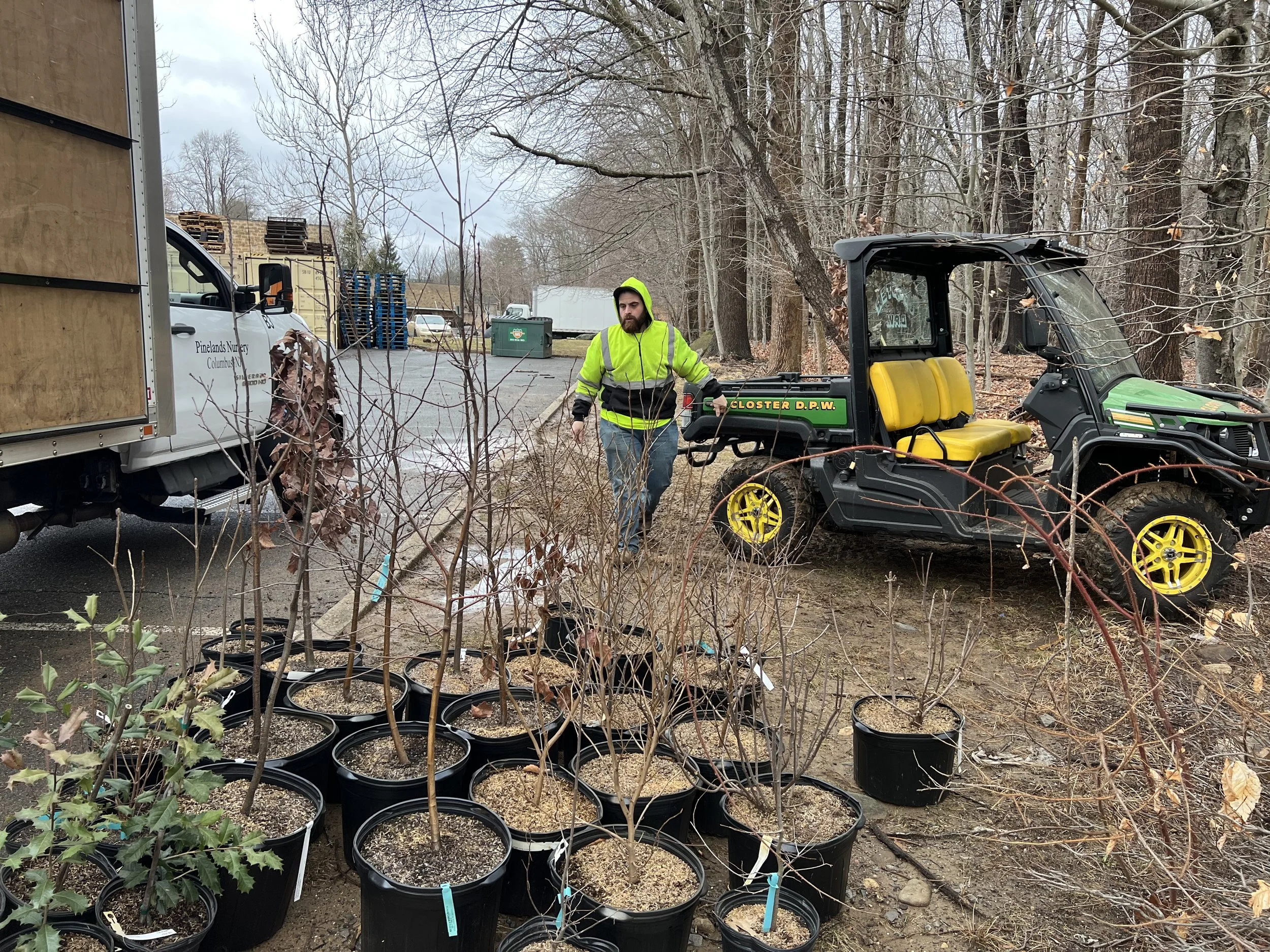
Active reforestation efforts began in 2022 within the western portion of the reserve along the Orange Trail. Our progress has been made possible through the vital financial support of Veolia (a major local water supplier and owner of the Oradell Reservoir) and the Borough of Closter’s Open Space Grant Program.
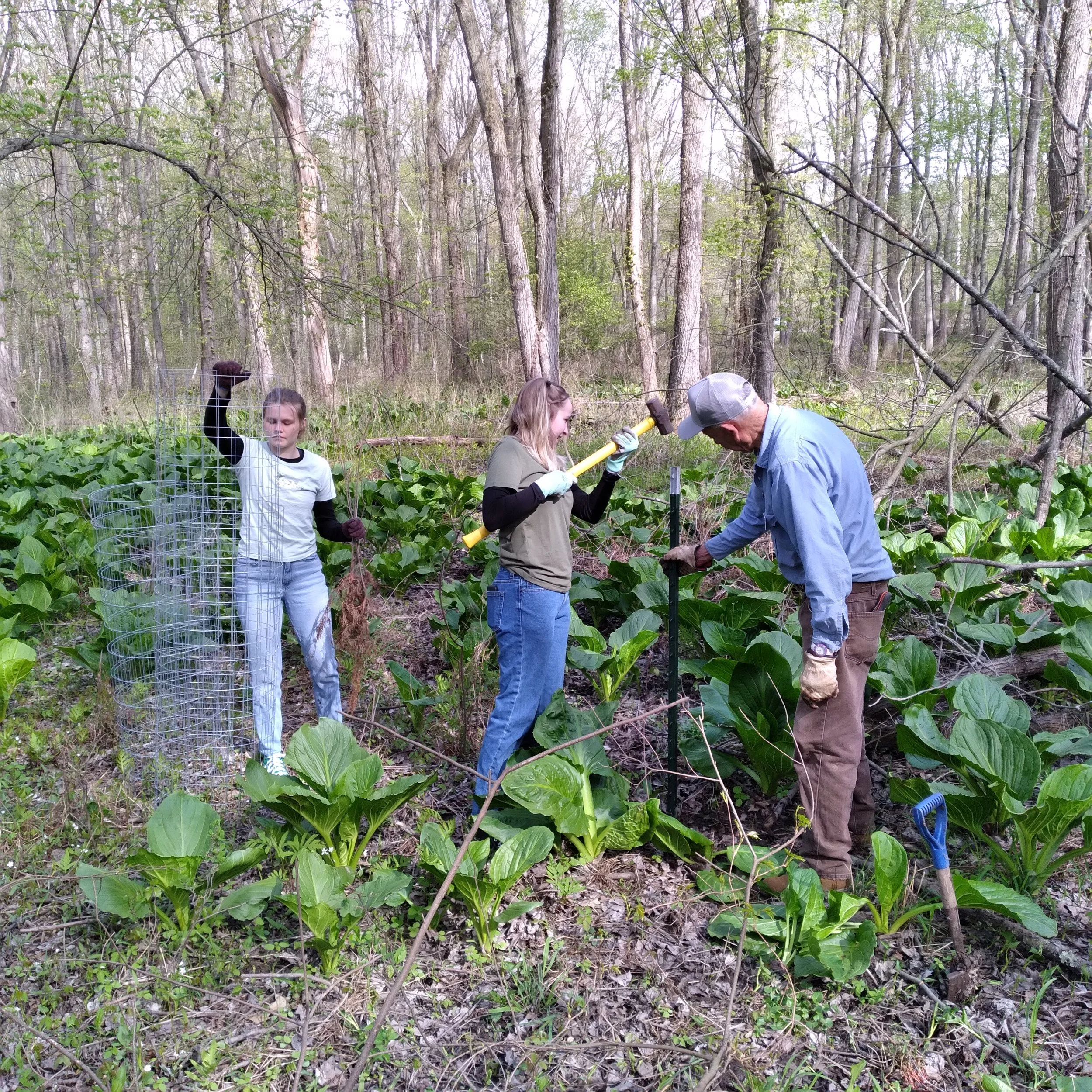
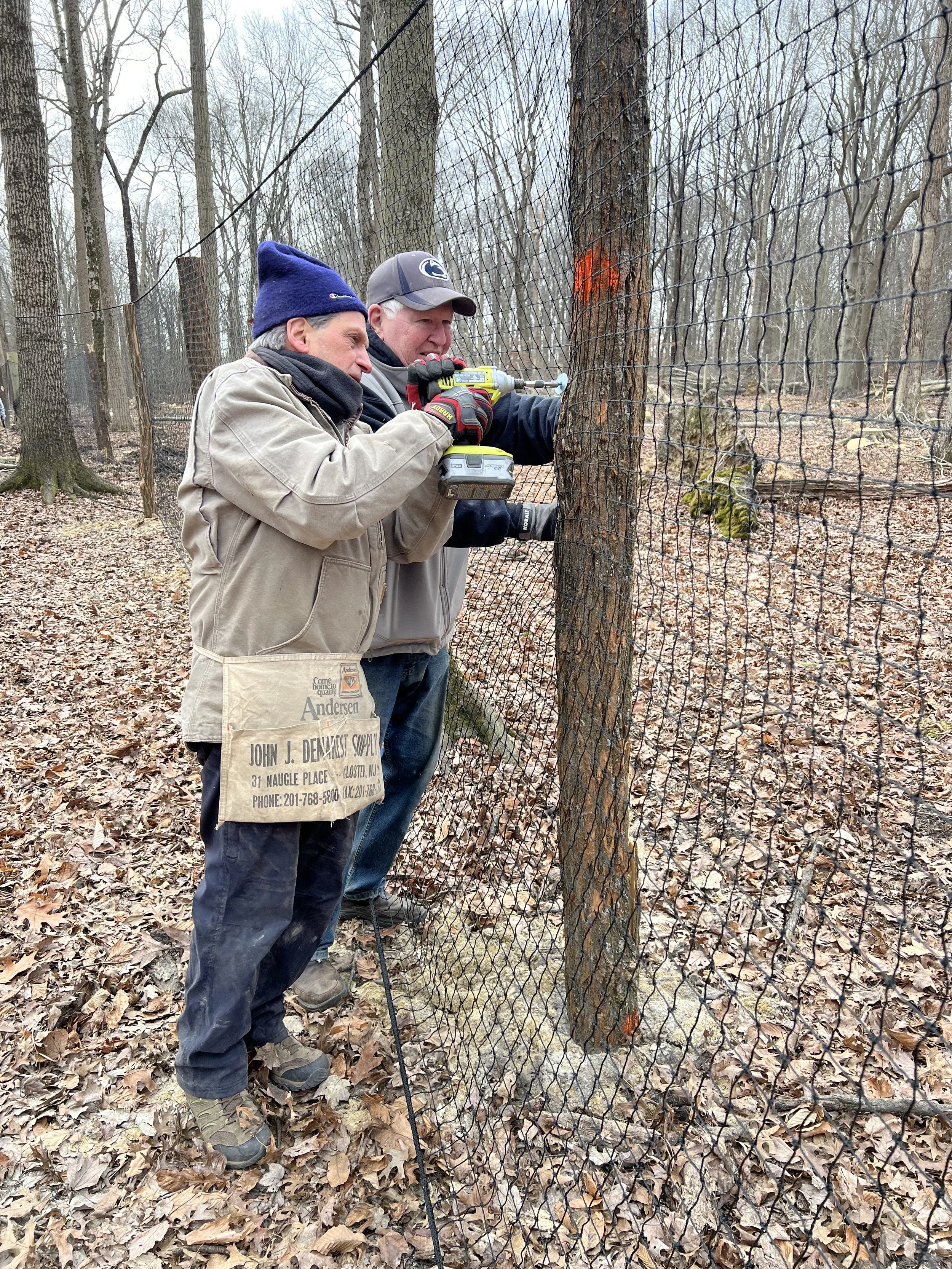
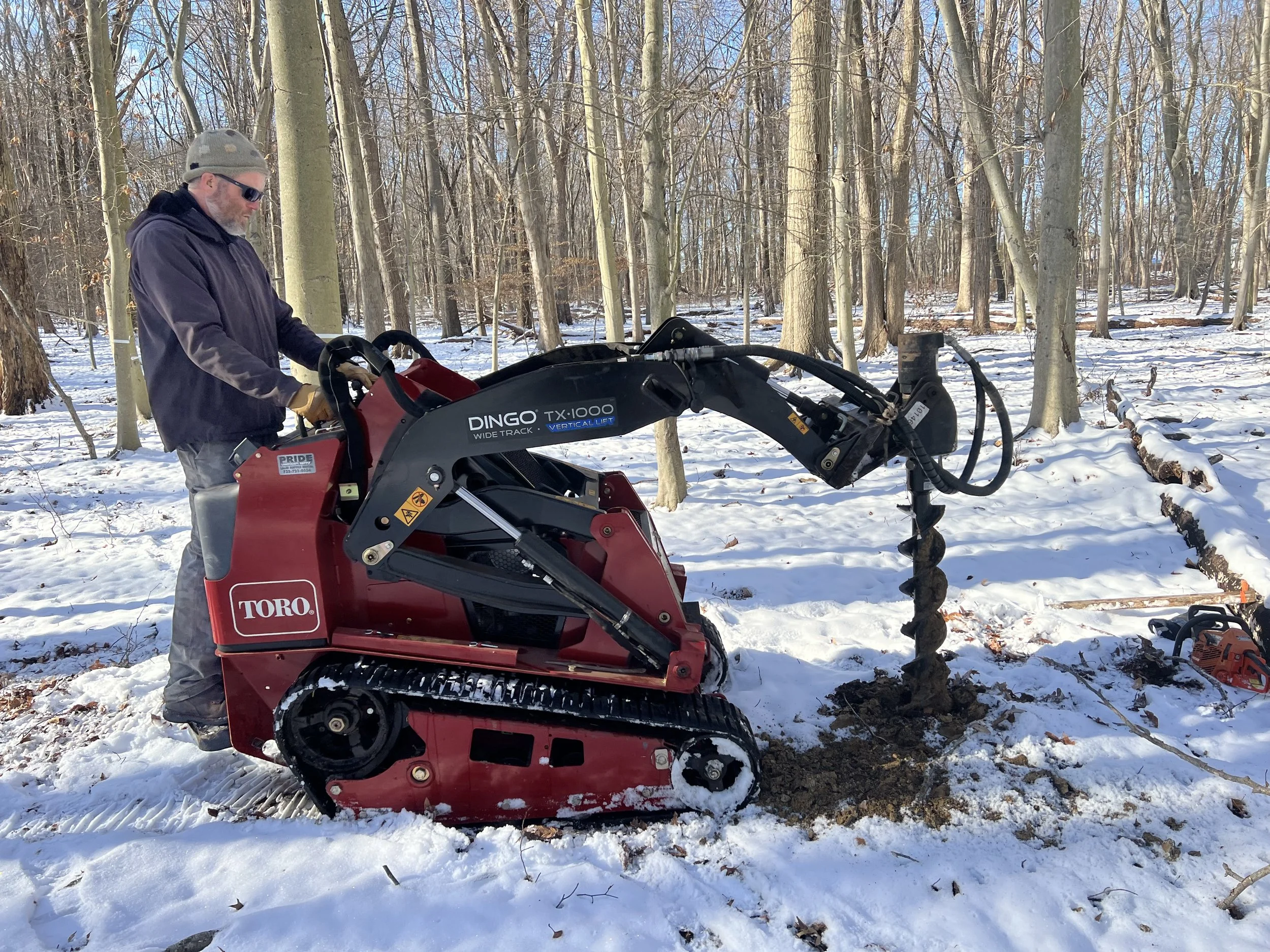
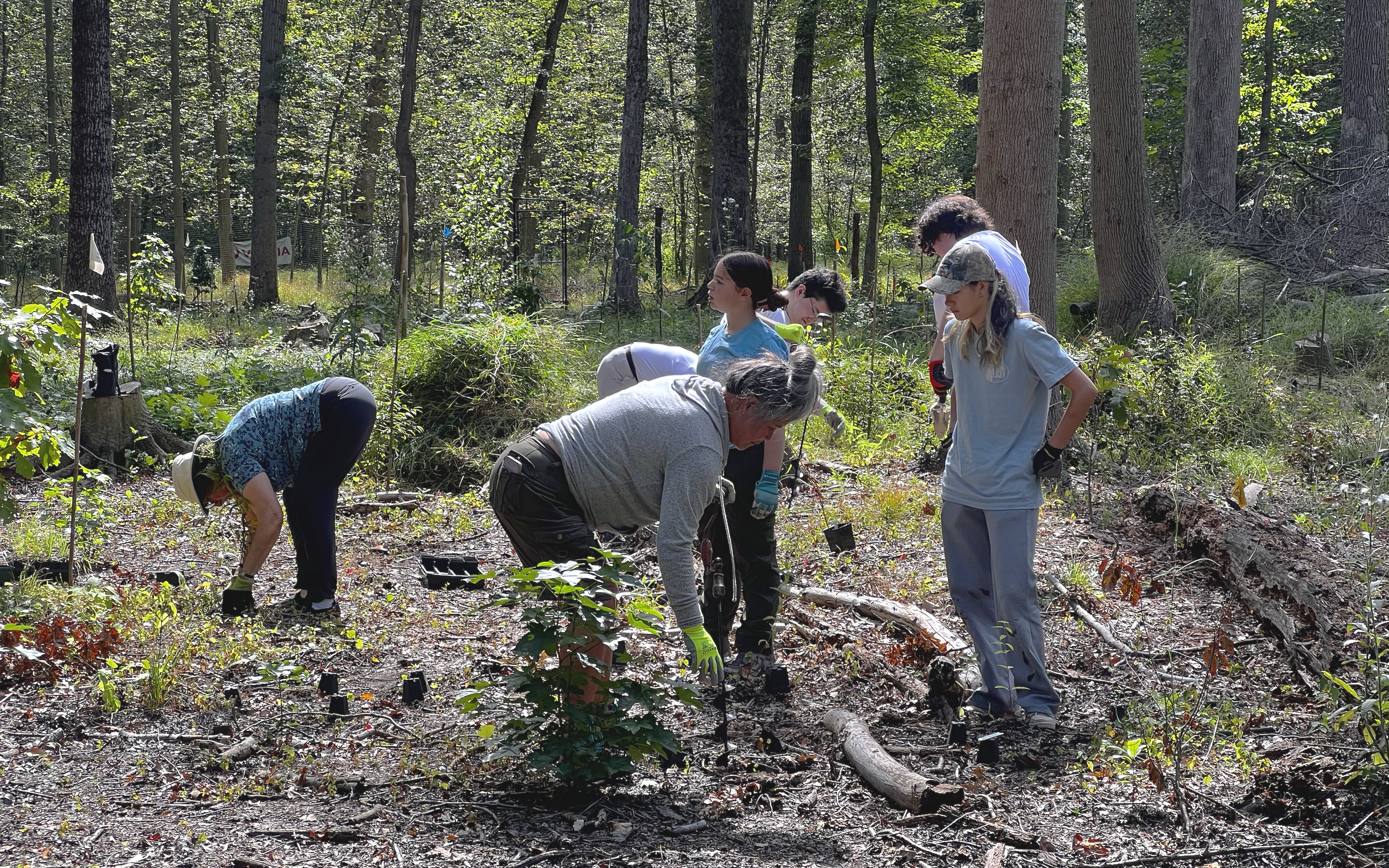
In 2023, the CNC constructed a one-acre deer-proof exclosure using rot-resistant locust posts and heavy mesh fencing. In the spring of 2024, over 200 native wetland plant species were planted by a combination of volunteers and professional forest managers; the species planted and their distribution was established in partnership with the Wild Woods Restoration Project. A second one-acre exclosure was completed nearby in January 2025 with 200 plants successfully established within that spring. Grant support from Veolia in 2025, along with an in-kind donation from ARRC Native Nursery, allowed for over 550 native plants to be purchased and transported to CNC for installation within and around the exclosures.
Altogether, between 2024 and 2026, over 900 plants were planted, laying a solid foundation for a multi-year effort to restore a sustainable forest ecosystem. To evaluate the effectiveness of our reforestation methods, both large exclosures will be carefully maintained and monitored. Over time, the exclosures and the work conducted inside will result in the establishment of a robust understory and the gradual renewal of the forest canopy.
WHITE TRAIL REFORESTATION AREA
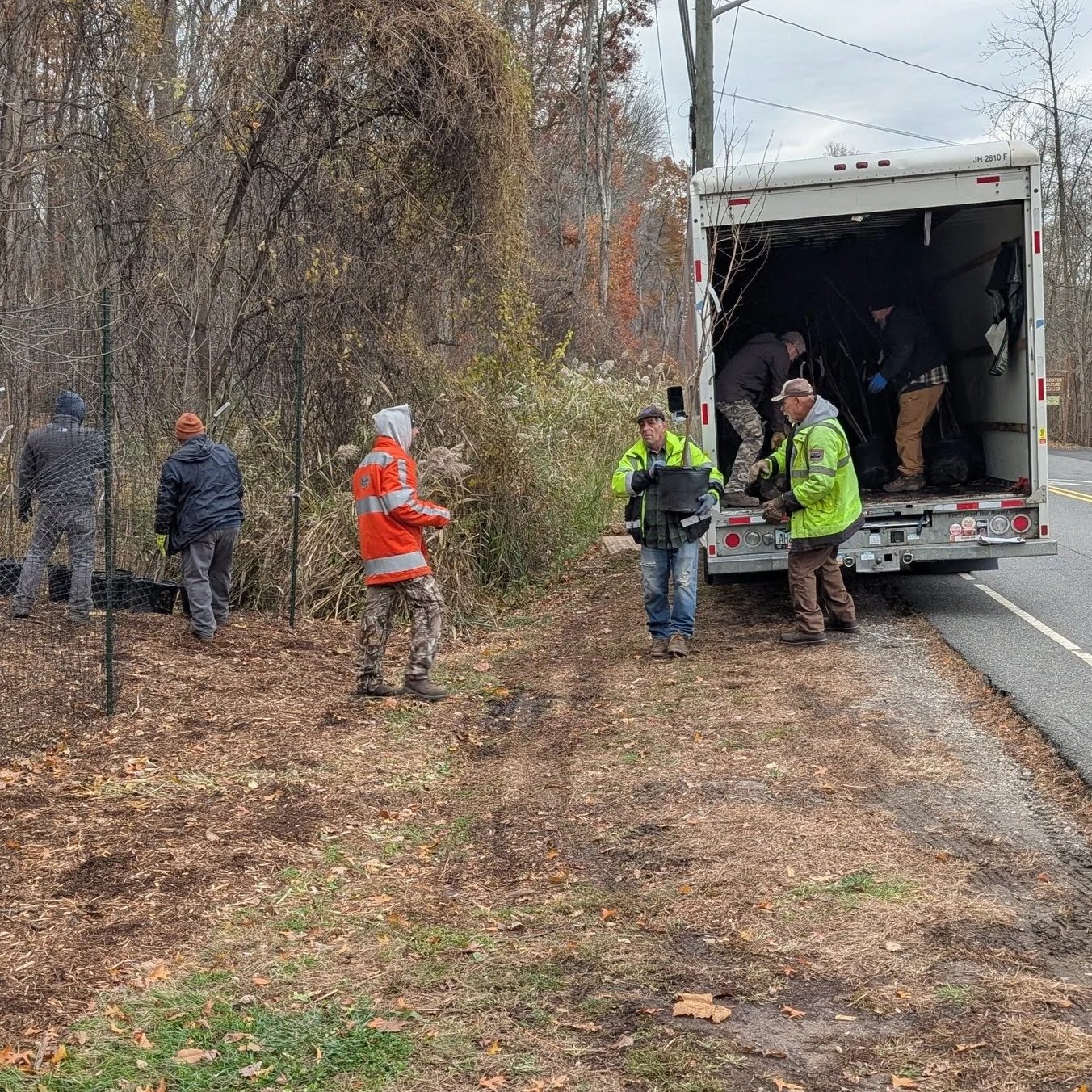
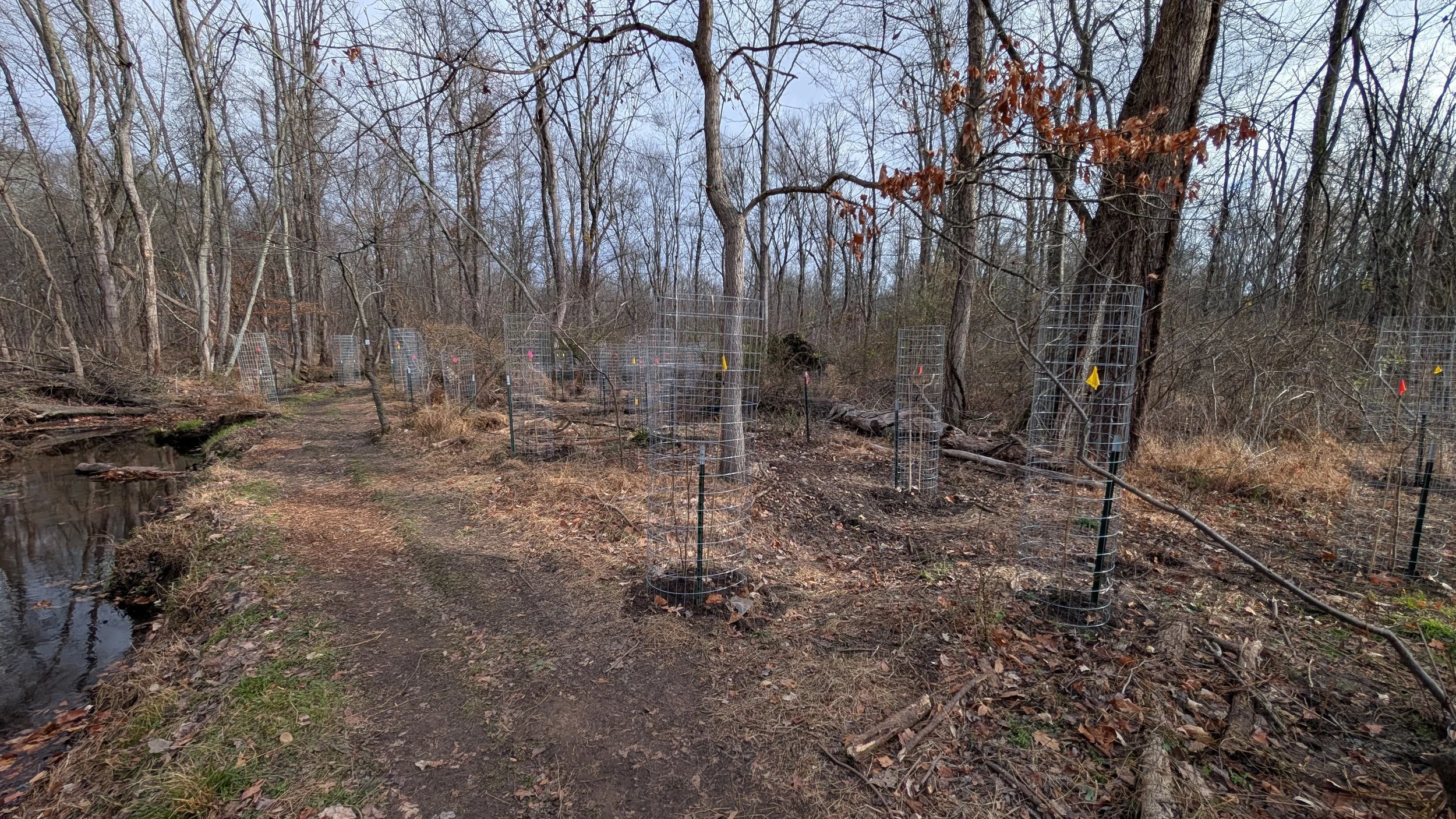
In 2025, we were able to expand active reforestation efforts to the White Trail and the area bordering Anderson Brook thanks to a generous grant awarded by the Borough of Closter’s Open Space funding program. Like the Orange Trail area work, the goal of the project is to plant native trees and shrubs while protecting them from destructive deer browse. However, the methodology was shifted away from large-scale exclosures to individual and small-group protective fencing, due to the geography of the project area.
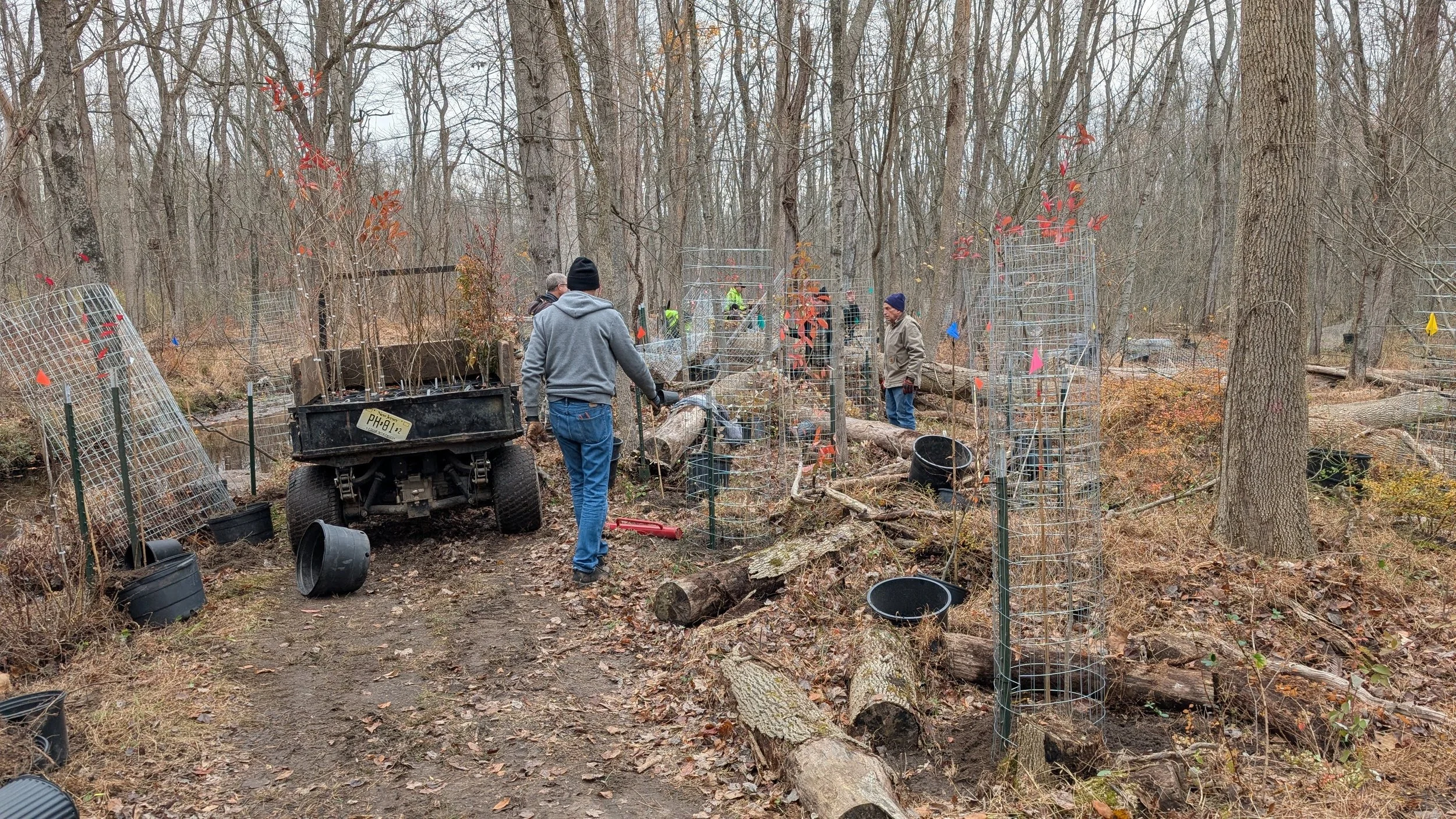
While volunteer labor continued to play an important role, the Open Space Grant allowed us to hire professional labor to undertake the brunt of the installation and planting, making the completion of the work impressively efficient. In the fall of 2025, 345 plants were planted with protective fencing along the White Trail and Anderson Brook. This was followed by an additional planting effort in spring of 2026, where 410 plants were installed in the space where the White Trail and Red Trail meet.
The journey of restoring and nurturing our forest will be an ongoing commitment without a definitive endpoint.
LOOKING AHEAD
We remain dedicated to safeguarding the health of our forest, investigating other best practices to address ongoing issues and actively working to restore its ecological balance. We will continue to evaluate areas of the reserve for potential reforestation installations, while ensuring that the completed installations receive the dedicated maintenance they need to thrive and transition to resilient canopy and understory respectively.
Moving forward, we recognize the critical need to address the ongoing threat of invasive species, which compete with all the native plants necessary to foster thriving ecosystem. Grant funds from Veolia and the Borough of Closter have already been obtained in 2026 to fund these efforts. We will utilize a combination of chemical and mechanical methods, conducted by licensed professionals under direction of our management plan. It is estimated that our restoration areas will require 8 years of growth and protection before they are able to naturally outcompete invasive species. Our work in 2026 will be focused on continuing to fill these areas to capacity with native plants while actively mitigating the threats of invasives and deer browse.
The science of restoring severely damaged forest ecosystems in the northeastern U.S. is still in its early stages. There is significant trial and error, and the sharing of information is crucial for determining effective restoration methods. Flexibility in planning is important to take advantage of new information and unexpected availability of plant materials. As the Reforestation Initiative progresses, we will collect meaningful data, continuingly evaluate our methods, and implement expert guidance so as to move forward with greatest efficiency and success.
Thanks to our Partners
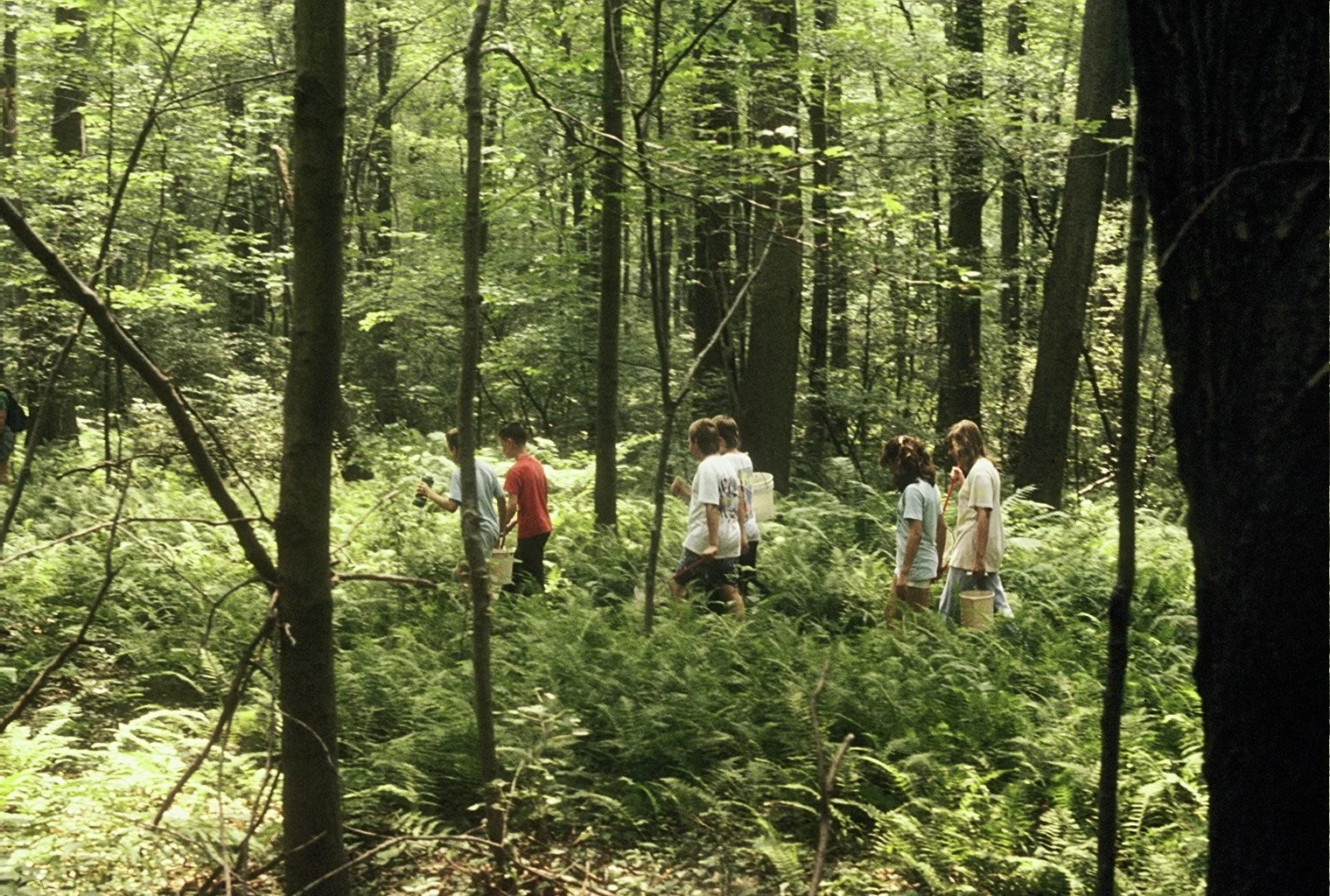
The success of the project, from 2022 to today, is due to the hard work from CNC volunteers and our trail crew, the Closter Department of Public Works, Veolia staff crews, the Cresskill High School Environmental Club, and the community at large. We are particularly grateful to Todd Bradbury and Bradbury Landscaping, whose expertise in planting methodology and placement, along with a generous plant donation, were instrumental to construction and implementation of the exclosures along the Orange Trail.
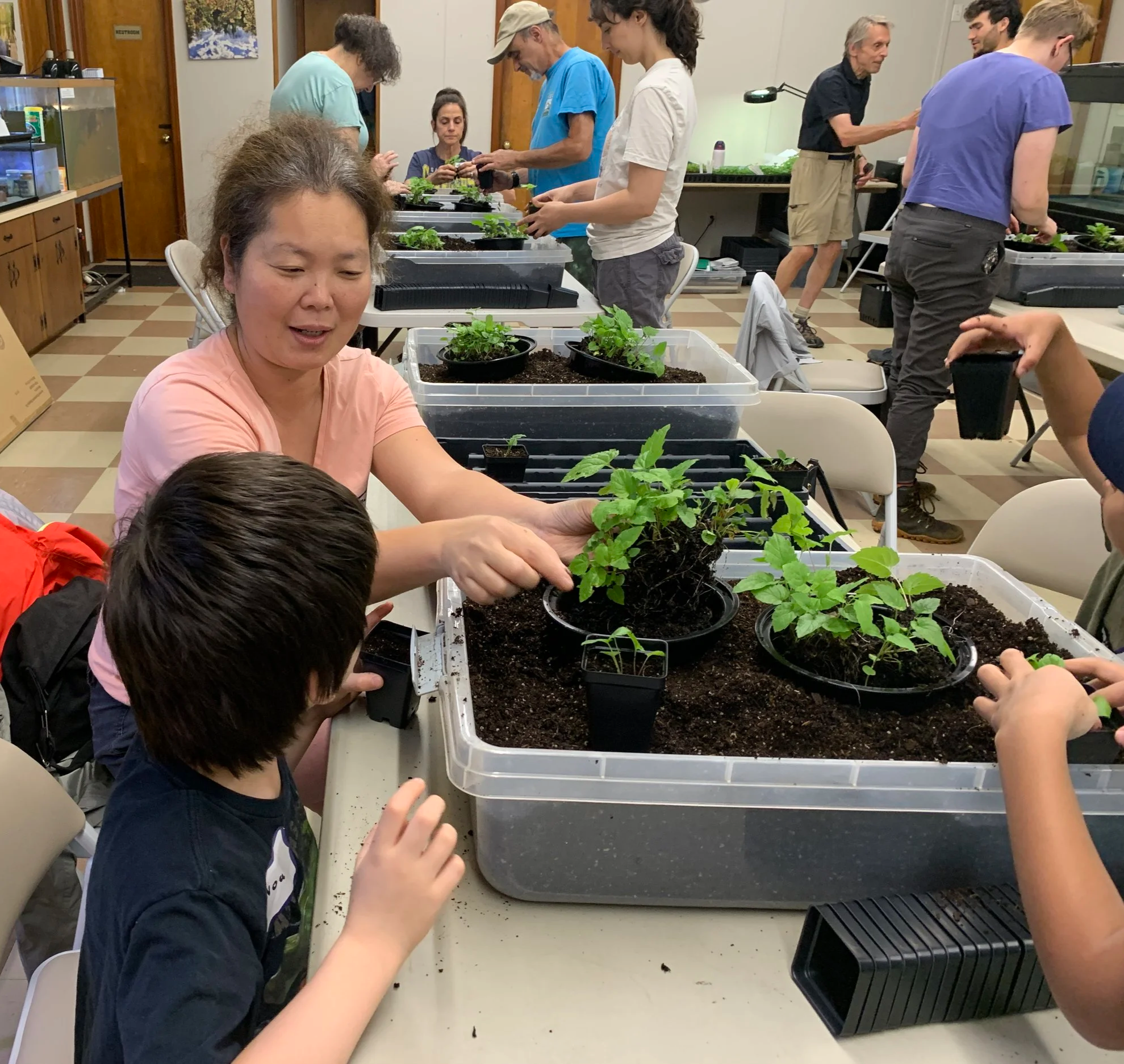
Beyond offering essential consultation and planning, the Wild Woods Restoration Project makes a direct, hands-on contribution to the ongoing reforestation efforts. In Spring 2025, volunteers, guided by Wild Woods staff, potted and nurtured seedlings grown from native seeds collected at Closter Nature Center and nearby reserves. In the fall, these seedlings were returned to our grounds and planted within our exclosures, adding an additional 1,000 native wildflowers to the restoration areas. Similar work is underway for 2026.
